
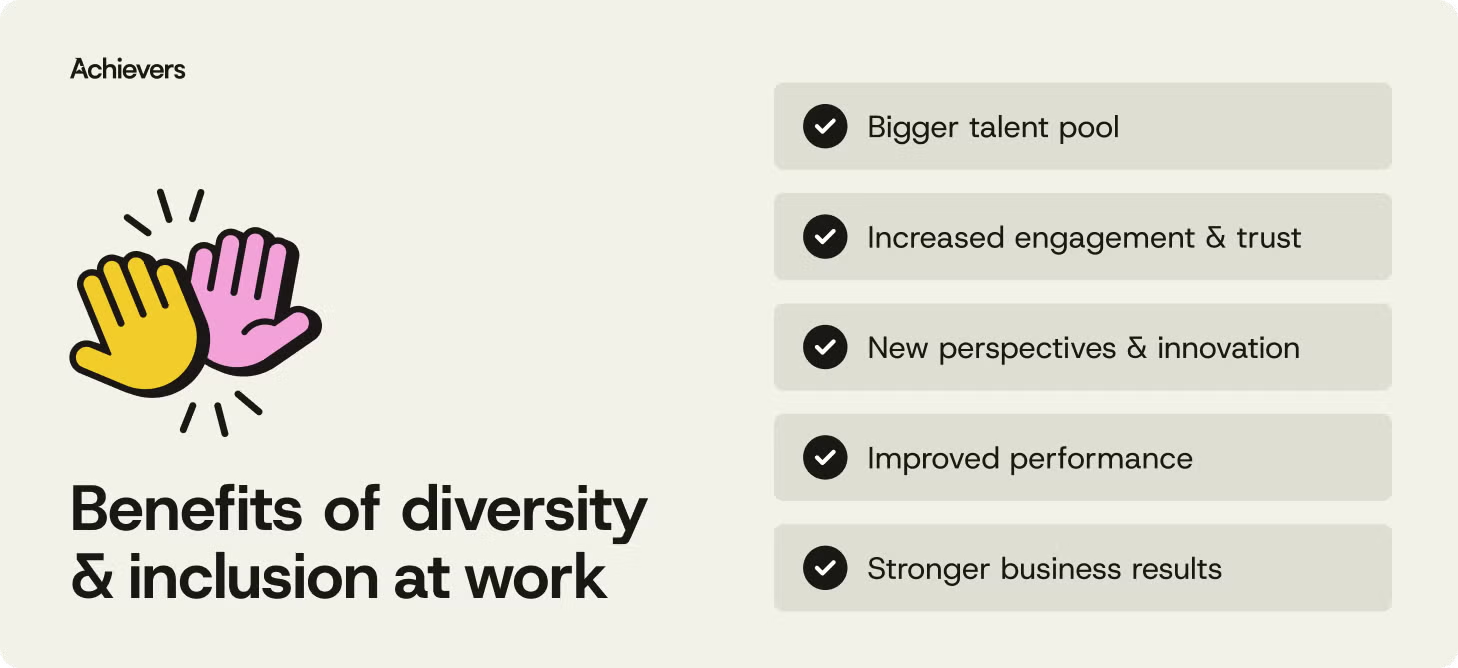
Diversity and inclusion aren’t just about checking boxes or hosting one-off lunch-and-learns. When done right, they create something deeper — a sense of belonging that makes people want to stay, contribute, and enjoy showing up to work. Bonus: they also happen to be really good for business. Here’s why:
Casting a wider net in your hiring process — across backgrounds, ethnicities, generations, and experiences — doesn’t just look good on paper. It helps you find the right person for the job, not just the most obvious one.
Need proof? Delta Airlines credits a 10% boost in global market penetration in 2024 to its stronger focus on diversity and inclusion. Turns out, when your team better reflects the world outside your office walls, opportunities tend to follow.
When people feel included, they’re more likely to speak up, stay engaged, and go that extra inch (or mile) for their team. Inclusive workplaces also see fewer sick days and better overall well-being — probably because no one’s burning out trying to fit into a mold that doesn’t fit.
Bringing together different voices isn’t just good for culture — it’s good for problem-solving. Diverse teams are less prone to group thinking and more likely to find fresh, creative solutions. More angles = better ideas. Simple math.
Diversity is also a major performance driver. Companies with greater racial and ethnic diversity are 35% more likely to outperform their competitors. Because when your team sees things from more sides, they have everything they need to deliver results that actually land.
At the end of the day, inclusion isn’t just the right thing to do — it’s the smart thing to do. It sharpens strategy, fuels innovation, and drives results. In fact, 71% of leaders with mature DEI strategies say they usually beat competitors to market. That’s not just good culture — that’s competitive advantage.
Bron: https://www.achievers.com/blog/diversity-and-inclusion/




Wij houden jou graag op de hoogte van de laatste ontwikkelingen rondom onze interessante vacatures en onze unieke netwerk- en wervingsevents. Maar ben je actief op zoek naar een nieuwe carrière en wil je graag dat wij meedenken?
Upload dan je CV hier!